
A Good Puzzle Should Let You Leave
A finished puzzle should feel finished. What happens next reveals whether a game respects your time or merely wants more of it.
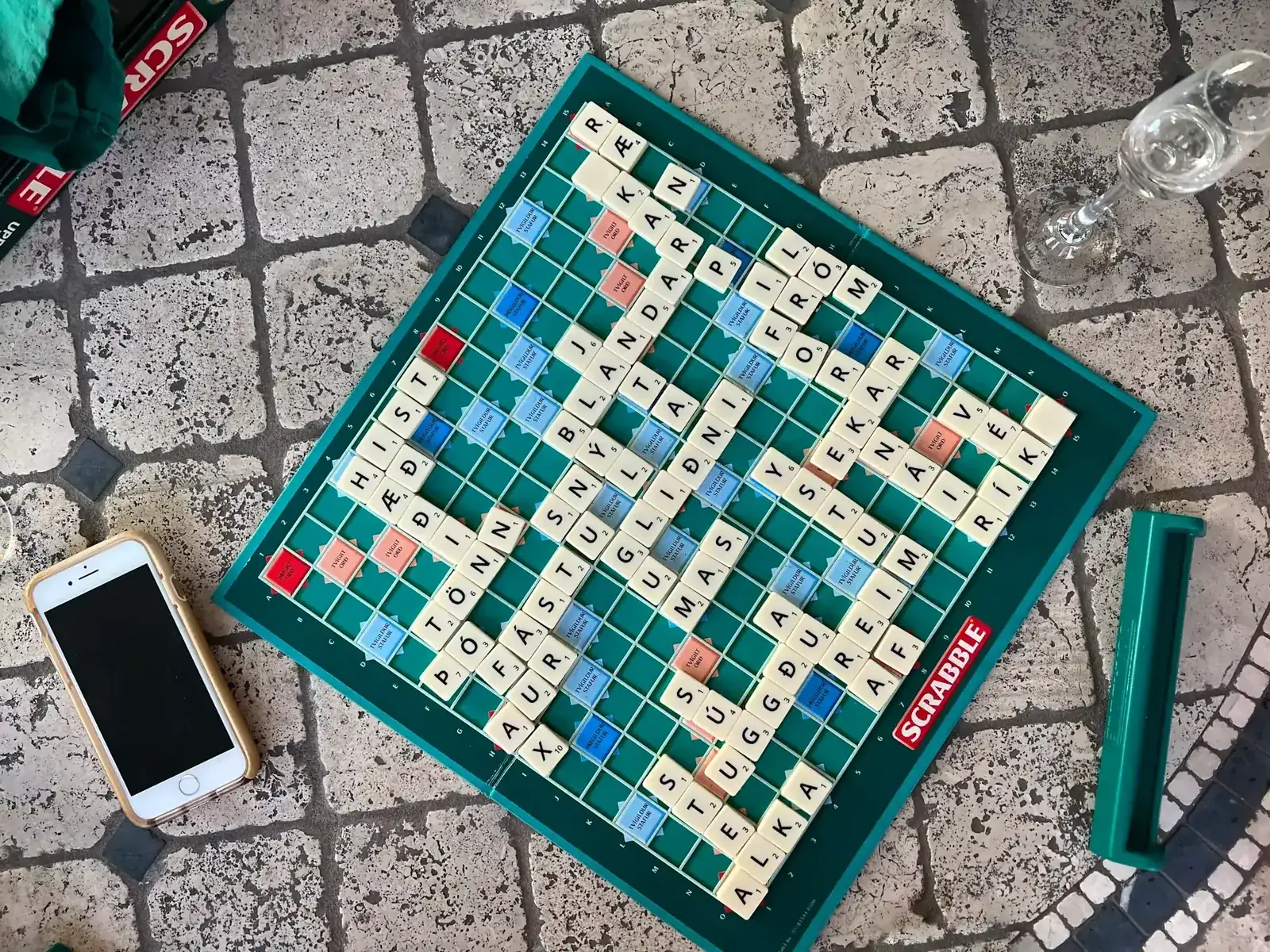
Put the final piece into a jigsaw and the jigsaw does something remarkably civilised: it ends.
There is no warning that the completed picture will disappear at midnight. The box does not tell you that your seven-day streak is in danger. Nobody offers to double your reward if you begin another thousand pieces immediately. You look at the picture for a while, perhaps discover that one piece is still under the sofa, and then you walk away.
Digital puzzles can be just as courteous. Animation, sound, achievements and daily challenges are not evidence of bad intent. The revealing moment comes after a round is over. Does the game let completion stand, or does it immediately turn stopping into a small act of resistance?
A clean ending is a design feature
A crossword grid tells you how much remains. So does a Sudoku or a jigsaw. You may badly misjudge how long the last corner will take—the uniformly blue sky has humbled better people—but the boundary is visible.
That boundary gives the player useful control. You can decide to finish tonight, leave three clues for breakfast or put the puzzle aside for a week. The work already done remains where you left it. Starting the next puzzle is a new decision rather than a continuation disguised as one.
Well-made digital games preserve this shape. They save progress, allow a missed day and present another puzzle without shoving it through the door. A daily challenge can be a pleasant ritual. A reminder can help when the player asked for one. Rewards can mark progress without owning the calendar.
None of this requires a game to be easy. A difficult clue may resist you for hours and still respect your time. Difficulty belongs inside the puzzle; coercion sits around it.
When the game follows you out
The familiar list is long: streaks, lives, currencies, expiring events, daily rewards, leagues, chests and notifications. Each can support a perfectly enjoyable game. Together, or handled badly, they can make leaving feel expensive.
A streak is the clearest example. At first it records a habit: you played on Monday, Tuesday and Wednesday. Then the number grows large enough to feel like property. Missing Thursday no longer means simply not playing; it means destroying something you have accumulated. The puzzle has acquired a tiny hostage.
Limited events use time in a similar way. The deadline may create variety and give a community something to do together. It can also manufacture urgency that has nothing to do with the puzzle. Solve this now, not because the problem is interesting, but because the hat, badge or fictional shrub vanishes in six hours.
Lives systems are blunter. A game interrupts play after a set number of mistakes, makes the player wait and then sells relief from the delay it created. That is not the same transaction as paying for a thoughtfully made set of puzzles. One sells material; the other sells the removal of friction.
The quickest way to judge these systems is to watch what happens when a player says “not now”. Can a day be missed without losing status? Are notifications genuinely optional? Does finishing produce a result worth sitting with, or merely three buttons and a countdown? Is money buying new work from the designer, or buying an escape from an irritation the designer installed?
No single answer settles the question. The pattern does.
Annoying is not a diagnosis
Conversations about games often jump from “this feature is pushy” to “this game is addictive”. That leap helps nobody. People can play for a long time, look forward to a daily puzzle and care about improving without having a disorder.
The World Health Organization sets a much higher bar for gaming disorder. Its definition involves impaired control, gaming taking priority over other parts of life and continued play despite negative consequences. The pattern must cause significant impairment and would normally be evident for at least twelve months. The WHO also says the disorder affects only a small proportion of people who play games.
Clinical language is therefore the wrong tool for ordinary design criticism. A streak can be manipulative without causing an illness. A notification can be rude. A currency can be deliberately confusing. We already have words for these things, and they are more precise.
The distinction matters because otherwise designers get an absurdly low standard: if a feature does not produce a diagnosable disorder, apparently it deserves no criticism. Players are allowed to expect more than the absence of clinical harm. They can ask for clarity, proportion and a reasonable stopping point.
Fair puzzle design works on the same principle as a fair clue. A crossword setter may misdirect you, but the route to the answer must exist. The resistance should come from the problem you chose to solve, not from a surrounding system quietly changing the cost of leaving.
A good puzzle can ask for one more thought. It can be difficult, competitive, elaborate and absorbing. It should also accept “not now” without sulking.
Sources and further reading
- “Addictive behaviours: Gaming disorder”, World Health Organization.